
Failing Vein Valves Behind CVI
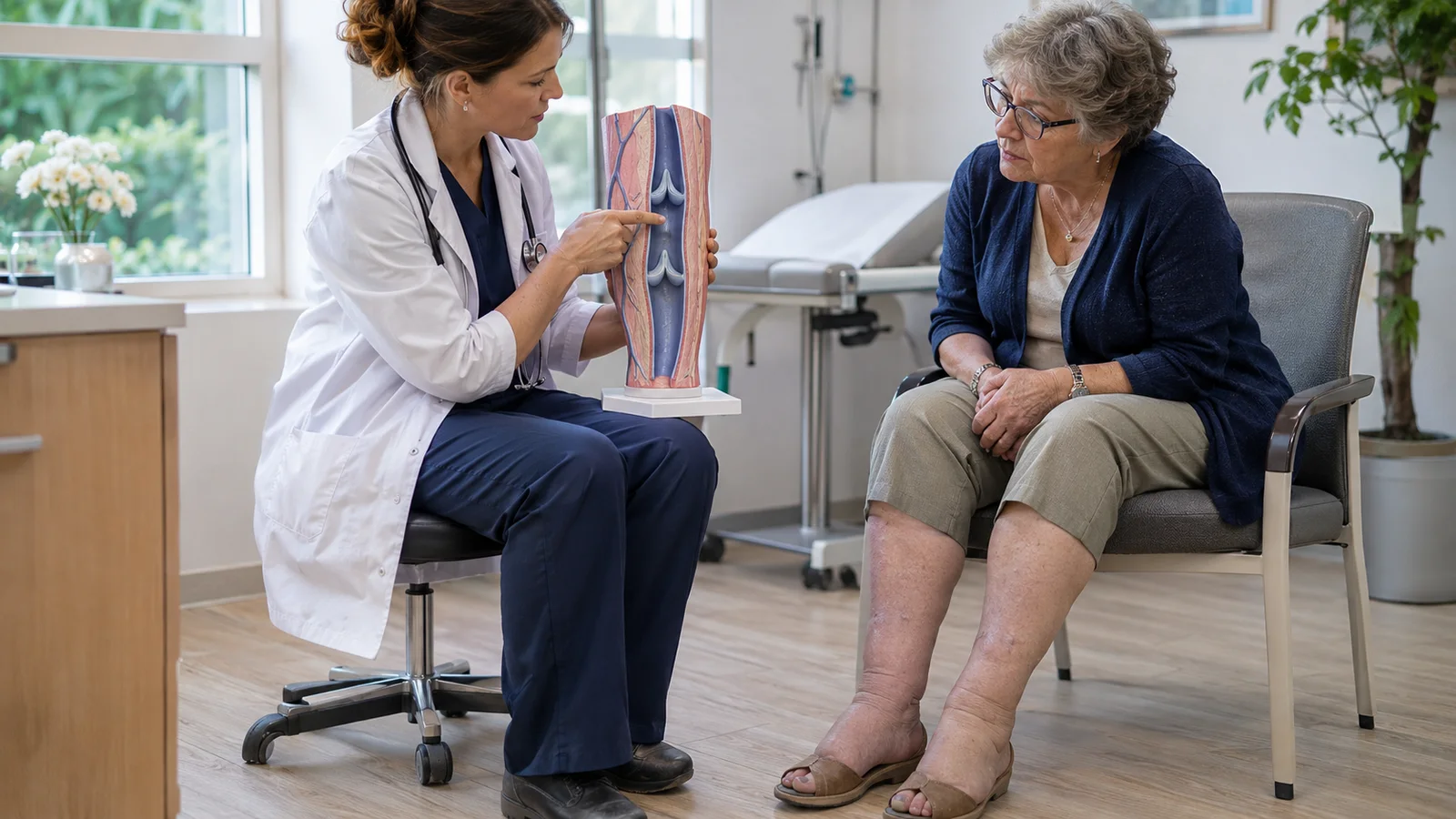
Failing valves sit at the start of the CVI sequence, so this page covers them first and stops there. Read it before the guides on stages and self-care.
What happens when the valves stop working
vascular.org states the mechanism in one sentence. If you have Chronic Venous Insufficiency (CVI), the valves in your veins (usually in the leg or sometimes the arms) don't work, causing blood to pool in your legs and putting increased pressure on the walls of the veins.
That description is also published by the Society for Vascular Surgery on its chronic venous insufficiency page.
The sequence in three steps
Take the mechanism one step at a time, as vascular.org lays it out. The valves stop working, blood pools in the legs, and pressure rises on the vein walls. Each step follows from the one before it, so the valves are the place to start.
A second source on vein trouble
The MedlinePlus Medical Encyclopedia carries a varicose veins entry for readers who want to see how vein trouble is described elsewhere.
What to gather before the visit
Write down which leg bothers you, when it started, and what the day looked like around the worst moments. A dated note beats a memory.
The first thing to do
Open the Society for Vascular Surgery's varicose veins page, check it against your notes, and book the appointment while the notes are fresh.